نوع مقاله : مقاله ترویجی
عنوان مقاله English
نویسنده English
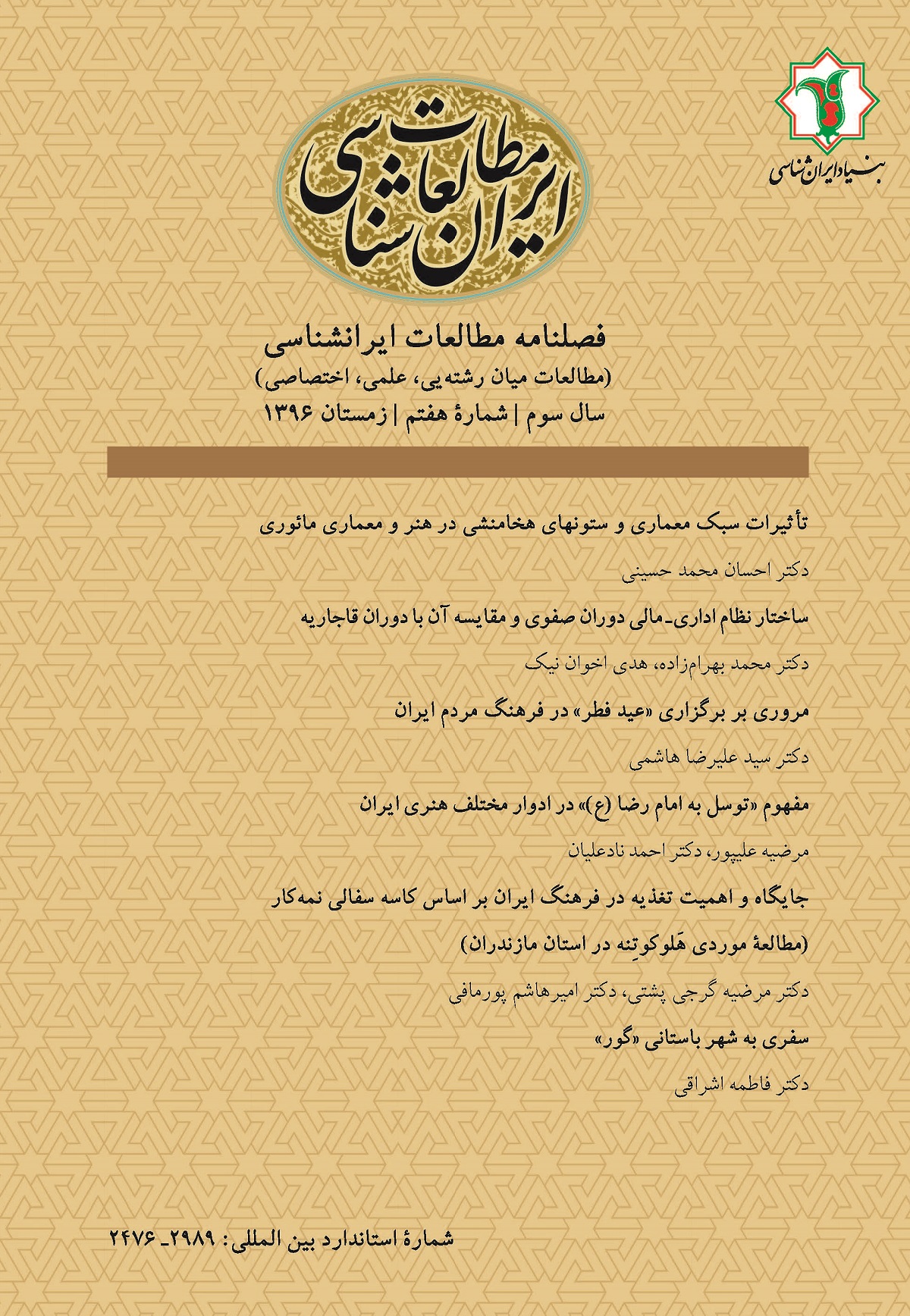
Given its unique features and geographical and racial diversity, the ancient land of India is the cradle of one of the most ancient civilizations of the world which has played a significant role in the history of human culture. In the course of history, this civilization has always had a very close relationship with the glorious civilization of its western neighbor, Iran. Undoubtedly, Iranian culture and civilization have played a most significant role in the formation of Indian civilization. The relationship between the two countries is so strong, and their cultural and artistic exchanges are so vast that, if a researcher is not familiar with Iranian culture and art, they will not be able to make an accurate and comprehensive study of Indian culture and art. After the immigration of Aryans and the rise of Hinduism in India and Zoroastrianism in Iran, one can witness several similarities between the ancient religions and rituals of the two countries and between the sacred Avestan texts and the Vedas. Likewise, one can observe the relation of the Achaemenid architectural patterns and concepts and artistic designs in the art and architecture of the Mauryan Dynasty in India. Alongside such architectural effects, the spread of the style of the column and rock inscriptions which were made by Ashoka in India remind the viewer, in a way, of the same tradition in the Achaemenid culture. The type of erected columns and the employed architectural style in India during the 4th and 3rd centuries BC were completely influenced by the art and architecture of the Achaemenid period.
کلیدواژهها English